Journalist. Mother. Bunny enthusiast. Pop culture junkie.

Journalist. Mother. Bunny enthusiast. Pop culture junkie.

Tuesday, November 15, 2011

Zelda Fitzgerald: the first flapper


Zelda Fitzgerald was a spoiled brat.

Her daddy was one of the most richest and prominent men in the South, so Zelda basically got away with doing whatever she wanted.

The teenage beauty smoke, drank, stayed out with boys all night, and spoke her mind freely, much to the shock of proper society.

When future literary superstar F. Scott Fitzgerald first saw her at a dance in Montgomery, Alabama, he was a goner. So was every other guy in the room.


The flirtatious southern belle fell madly in love with Scott, who was a soldier at the time. But being the snotty princess she was, she refused to marry him until his first novel, This Side of Paradise, was released in 1920.

Their rock star marriage shook the nation.


Whatever money came out of the success of Scott's novels was used towards designer clothes and outrageous, extravagant parties.

The two lovebirds splashed drunkenly in public fountains, rode on top of taxis, passed out in busy streets, and basically got kicked out of every single respectable establishment in New York City.

Their intoxicated shenanigans amidst prohibition were splashed all over the tabloids.


“Spinach and champagne. Going back to the kitchens at the old Waldorf. Dancing on the kitchen tables, wearing the chef’s headgear. Finally, a crash and being escorted out by the house detectives.”
-Zelda Fitzgerald, describing her life in the 1920s.


The 20-something beauty had short hair, wore short dresses, powdered makeup on her face, and carelessly flung long beads over her outfits. As a result, millions of young women around the world, desperate to be as cool, followed suit. The media deemed them "flappers."


Scott chronicled their adventures in his books, basing almost every female character on his dazzling wife.


Zelda even began writing stories herself, which were excellent. But in order to sell them, she had to put her husband's byline on them, revoking her credit. The smitten wife was not bitter, however, because in the 1920s, this was simply how the world worked.


Life for the wealthy young couple was far from perfect, however.

Scott's alcoholism was spiraling out of control. He became increasingly mean to Zelda and he began sleeping around.

His hero and close friend, Ernest Hemingway, publicly despised Zelda, and told anyone who would listen that she was the downfall of her husband's brilliant career.


Desperate to escape her wretched homelife, Zelda began pursuing ballet, a hobby she enjoyed as a child. Despite being told starting a dance career in her late 20s was absurd, Zelda practiced for hours every single day and enlisted the help of famous instructors.

But even though her talent was flourishing, her mind was not.

Perhaps due to her massive unhappiness and stressful life, Zelda began slipping into uncontrollable madness.


Zelda was finally admitted into a sanitarium in Paris for schizophrenia in 1930. Although she remained married, Scott had no intention of being faithful. He moved to Hollywood and the couple never got back together.


During her stay in the mental health facility, Zelda wrote autobiographical stories and painted ballerinas as a way to ease her suffering.

Sadly, she never regained enough sanity to be released.

In 1948, Zelda was locked in a room, awaiting electroshock therapy, when her mental health facility caught fire. It started in the kitchen and made its way to every single floor, at rapid speed.

Unable to escape the locked room, Zelda perished into the flames.

Monday, November 14, 2011

Bobbed Hair and Bathtub Gin


Thanks to my friend Erika, over at Cafe Fashionista, I have become a huge fan of Bobbed Hair and Bathtub Gin, a biographical view into the literary glam-fest of the 1920s.

The book focuses on four of the most prominent and fashionable female writers during that sparkling decade: Edna Ferber, Zelda Fitzgerald, Edna St. Vincent Millay, and Dorothy Parker.

If you're a huge fan of flapper fashion, extravagantly wild parties, and The Great Gatsby, this book is a delicious treat for you.

It not only tells you these women's stories, but provides an extraordinarily clear view into one of the most ritzy, fabulous decades in American history.

You simply need to read this book.

I've decided in honor of this book, I am going to feature all four of these legendary female writers on my blog.

Today, I'm going to start with Edna Ferber, the silent, stoic figure behind some of Hollywood's most iconic films and musicals.


The oldest of the four female writers featured, Edna was born to a middle-class Jewish family in 1885.


Edna started her career as a newspaper reporter in Milwaukee during the early 1920s.


Bored with her journalism career, Edna started writing novels, most of which featured strong female main characters and secondary characters who faced discrimination because of their religion or ethnicity.

Her characters were richly detailed and extremely vivid, because Edna firmly believed that the not-so-pretty people in this world often had the most interesting stories to tell.


After winning the Pulitzer Prize for the best-selling novel, So Big, Edna decided to try a different approach to novel-writing.

Like a true journalist, she decided to research her plots thoroughly, even venturing out to the scene, to experience it hands-on.

After spending four days aboard a showboat in North Carolina, Edna pieced together one of the most famous works of her career: Showboat.


Edna was aghast when she discovered Oscar Hammerstein II wanted to turn her serious novel into a Broadway musical. After all, the book's main themes involved racism and death. What was there to sing about?!

But the famous composer made it work and the musical became legendary. It's iconic song, "Ol' Man River" is still one of the most well-known Broadway songs of all time.


Over the years, most of Edna's novels were turned into a Broadway musical or feature film. One many of you may be familiar with is Giant, the Oscar-winning film starring Elizabeth Taylor and James Dean.


One of the reasons Edna may have been so successful is because the author had absolutely no distractions. She never married and is actually not known to have dated anyone, ever.


If you're interested in learning more about Edna, I would also recommend you read Edna Ferber's Hollywood, which details her long-standing collaboration with showbiz.

Friday, November 11, 2011

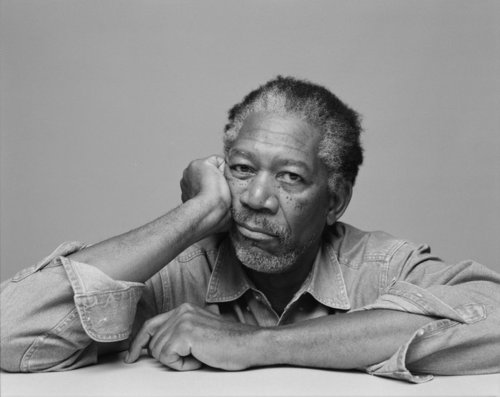
Photo Essay: Morgan Freeman being cooler than you.

Morgan Freeman with a cat on his head.


Morgan Freeman being bromantic.


Morgan Freeman looking sad.


Morgan Freeman looking SHOCKED.


Morgan Freeman being a bad ass.


Morgan Freeman and cotton candy.


Morgan Freeman wearing a bow tie.


Morgan Freeman laughing with his famous rich friends.


Morgan Freeman 40 years ago.


Morgan Freeman and Pasta Roni.


Morgan Freeman and a dolphin.


Twilight what, bitches?


Happy 11/11/11.

Wednesday, November 9, 2011

My Mexican Family


When I was 11-years-old, living in Tampa, I was the only girl among my friends who still had married parents.

My best friend Megan was the latest casualty of the divorce train. Her dad left her mom for a 20-something-year-old blonde named Amanda, which meant every time I spent the night at Megan's house, her wine-soaked mother would wail "fucking Amanda!" until 2 a.m., while a female friend consoled her.

When I casually mentioned this to my dad one afternoon, he was horrified.

So, my dad did what any concerned parent would do: he found me an adoptive family.

My dad wanted me to see what a real loving, stable family was like. He discovered a little Mexican family who lived behind his favorite grocery store. They were lower-middle-class, but rich with love. There was a mother and a father, who were immigrants, and their seven children, ranging from 18 to 5. There was even a daughter my age, named Christina.

For one year, my dad made me spend every single Sunday with the Perez family. And since I was brown, I fit right in!


I accompanied the family on their daily errands and adventures. We would go to the Hispanic district for odd food items, such as tongue and pork skins. We would run in dirty, littered fields, clutching bottled Coke and Tabasco-flavored Popsicles. When the van broke down, the girls and I would sit by the side of the highway and giggle about Jonathan Taylor Thomas.

As a miserable only child, I couldn't believe my luck. All of the sudden, it was like I had seven siblings! And they all adored me! They even referred to me as their sister in public, and nobody questioned it.

It was the good life.


The Perez family taught me the importance of church. Every Sunday morning, we would rush into the Spanish-speaking Catholic Church an hour late, ignoring the livid stares of parishioners and the priest. I think I even accidentally got baptized at the church, because Mr. Perez had me stand in a line where a priest threw Holy Water on me, said a bunch of stuff in Spanish, and then gave me a cross. The Perez family seemed very satisfied by the experience and kept saying "good, good" to me.

The Perez family taught me the importance of saving money. Some Sundays, Mr. Perez would buy a ticket at the movie theater and then open the emergency exit for us in the back. So the ten of us basically got to see movies for the price of one!


Their choices of movies were always odd, however. The only film I vividly remember was called Baby's Day Out, which was basically a nonsensical story about a toddler running loose in Chicago. But the Perez family loved it!

A year later, however, my dad's job got transferred to Nebraska, and we had to move. I sadly said goodbye to my Mexican family. I thought I would never see them again.


Well, four years ago, my dad took me to Orlando to see Morrissey in concert for my birthday. A couple days before the show, we decided to drive to Tampa and visit Christina, who I had recently gotten back in touch with through Facebook.

Christina, who is now ridiculously gorgeous, had us over for dinner in her new house. She updated us on her family and we were not prepared for it.


You see, three years after my family had moved to Nebraska, Mr. Perez left his wife for a beautiful coworker. The family was split apart and most of the siblings aren't talking to each other now as a result.

Christina, suffocated by her broken home, ran straight into the arms of a wealthy married man she had met in a Miami nightclub when she was 18. That man left his wife and married Christina, but then he mysteriously took off for Morocco in 2004 and never came back. But Christina didn't seem too upset with his absence, as she had already fallen in love with another man.


My dad and I sat there, listening to her talk, with our mouths open. We were in total shock.

When we left her house, my dad and I were quiet for most of the trip back to Orlando.

I felt really bad for my dad, who had had such faith in the Perez family. He truly believed the Mexican immigrants, with their family-oriented culture and Catholic morality, would survive.

"Nothing is sacred anymore," my dad finally said, sadly. "America has them now."

Saturday, November 5, 2011

Fairytale Gone Wrong: Gene Tierney


Gene Tierney was born on Nov. 19, 1920 in Brooklyn, New York, to a wealthy family. She spent her childhood in boarding schools, which included a prominent finishing school in Switzerland.

During a family vacation in Los Angeles, a movie director advised the 17-year-old beauty to consider acting. Bored with high society life, Gene decided to take his advice.


After a couple years, she became the toast of Broadway. During one of her performances in 1941, Darryl F. Zanuck, the head of 20th Century Fox was in the audience. He declared her the most beautiful women in the world and demanded she sign a contract with his movie studio.


It wasn't long before Gene became a well-known movie star.


But soon her life began to unravel. She had fallen in love with Oleg Cassini, a struggling fashion designer. Her father and the movie studio warned her to stay away from the Russian, who they deemed a fortune-hunter.


But it was not Oleg who was after Gene's money.

Soon after the love-struck couple eloped in Las Vegas, Gene discovered her own father had squandered all her hard-earned money behind her back. Gene was devastated and never spoke to her father again.


If that wasn't enough, while pregnant with her first child, Gene mysteriously contracted rubella (German measles) at a nightclub. As a result, her daughter was born with severe mental retardation. Gene was heartbroken. It put a massive strain on her marriage.


Gene tried to save her marriage, but depression had overcome her. Her despair drove her straight into the arms of a young, single John F. Kennedy. But that romance fizzled, leaving Gene right back where she started.


Gene soon received news that changed her life forever. A female fan came forward and admitted a couple years before, she had snuck out of a quarantine while sick with rubella, because she had heard Gene, her favorite movie star, was going to be at a popular night club. The excited fan had hugged Gene, thus, passing along the disease, which had ultimately destroyed Gene's unborn child at the time. The fan felt awful and apologized, but it was too late.


Gene had a nervous breakdown. The shocking revelation, mixed with her failed marriage and heartbreak over her mentally retarded daughter, was too much for the young woman to handle. It became impossible for her to work anymore. The 33-year-old allowed herself to be committed to an asylum in Connecticut.


Sadly, the movie star became a victim of shock therapy, a cruel and unusual treatment used for mental patients in the 1950s. After 27 shock treatments, Gene tried to escape the asylum, but was caught.


In 1957, Gene tried to commit suicide, but was saved and sent to a mental health facility in Kansas. While she was recovering, Gene worked as a salesgirl in a department store in Topeka, which caused a media sensation when a customer recognized her.


A year after Gene was released from the institute, she married Texas oil baron, Howard Lee. She loved living in Texas and had a very happy and peaceful life with her new husband.


Unfortunately, irony was the result of her death.

When Gene had been in her early 20s, she had started smoking to make her voice lower and more seductive, because she hadn't liked the way her high-pitched voice sounded on the big screen.


In 1991, shortly before her 71st birthday, she ended up dying from the smoking-related illness, emphysema.